









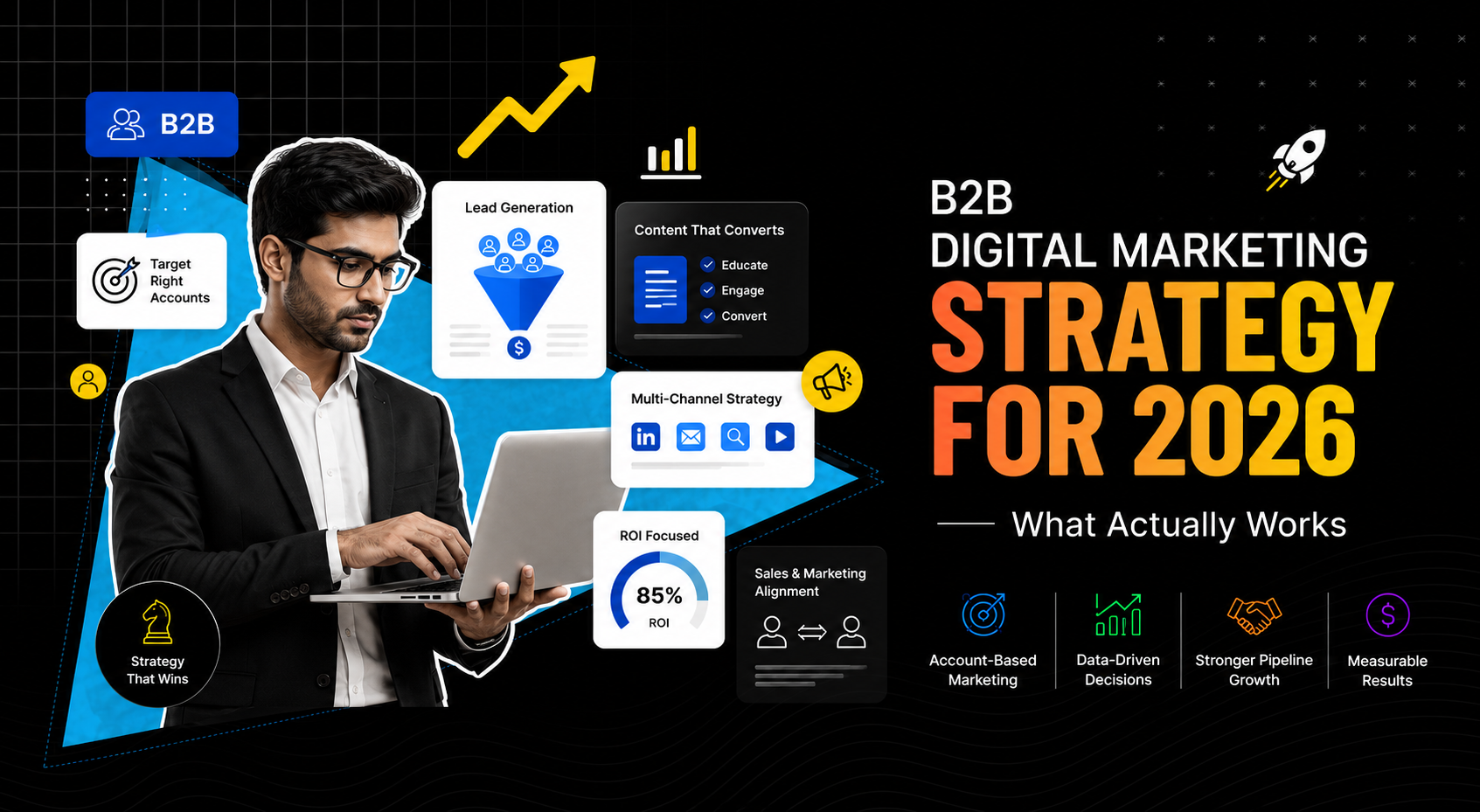
B2B Digital Marketing Strategy for 2026: What Actually Works
In 2026, B2B digital marketing is no longer about “spray and pray” campaigns. It’s about precision—using AI, first‑party data, and intent‑driven content to reach informed buyers across a non‑linear, AI‑mediated journey. For brands like 3minds, this means building strategies that focus on who your buyers are, what they’re researching, and how you can guide them to a decision with minimal friction.
1. Start with clear goals and audience focus
Before running a single ad or publishing a blog, define measurable goals: pipeline growth, lead‑to‑customer conversion, or account penetration in specific industries. Then segment your audience by role, company size, tech stack, and buying stage, so your messaging and channel mix actually speak to real decision‑makers.
2. Double‑down on SEO and content that answers intent
2026 B2B buyers start their journey with specific questions—often via AI‑assisted search or answer‑engine‑style queries. To win, brands need:
-
Long‑tail, problem‑oriented content (guides, FAQs, comparison posts).
-
Clear mapping of content to each stage: problem awareness, solution comparison, vendor evaluation.
At 3minds, we help clients turn their websites into “research hubs” by aligning blogs, case studies, and tools with the exact phrases their buyers are typing into search engines.
3. Use LinkedIn and social as a demand engine
LinkedIn and role‑specific social channels are now primary demand‑generation tools, not just “branding” channels. What actually works in 2026:
-
Thought‑leadership posts and short‑form videos that address real pain points.
-
Targeted ads segmented by role, industry, and company size.
-
Retargeting engaged users with case studies, webinars, or downloadable assets.
With the right strategy, even niche B2B service providers can generate qualified leads month‑after‑month through disciplined LinkedIn and social activity.
4. Personalize with data and AI
AI‑assisted marketing is no longer optional. Tools can now:
-
Score leads based on behavior, not just form‑fills.
-
Power dynamic content and email sequences that match intent.
-
Automate follow‑up while keeping tone human and helpful.
3minds integrates AI‑driven analytics and automation into client campaigns so every touchpoint feels relevant, from first‑click to post‑sale nurture.
5. Build a first‑party‑data foundation
With privacy changes and tracking restrictions, “rented” audiences (pure social‑only plays) are harder to rely on. What works in 2026:
-
Growing and segmenting owned email lists.
-
Offering high‑value content (checklists, templates, tools) in exchange for data.
-
Using website interactions and CRM data to personalize experiences and emails.
Brands that treat first‑party data as their core asset will see more predictable, repeatable growth.
6. Align sales and marketing (ABM style)
Account‑Based Marketing (ABM) and tight sales‑marketing alignment are now table stakes for high‑value B2B deals. In 2026, this looks like:
-
Identifying key accounts and mapping buying groups.
-
Coordinating targeted ads, emails, and content for each account.
-
Sharing real‑time intent data so sales outreach is contextual, not cold.
At 3minds, we help B2B brands design ABM‑style campaigns that turn interest into meetings and meetings into closed‑won deals.
7. Track the full funnel, not vanity metrics
In 2026, B2B marketing success is measured by pipeline and revenue, not just clicks or likes. What you should be tracking:
-
Impressions → Clicks → MQLs → Opportunities → Closed‑won.
-
Role‑based coverage and stage velocity across accounts.
By focusing on funnel‑wide KPIs, 3minds clients can double down on what actually drives revenue and cut what doesn’t.
Frequently Asked Questions
1. What channels should I focus on for B2B lead generation in 2026?
2. Is SEO still important for B2B in 2026?
3. How much should I rely on AI in my B2B marketing?
4. Do I need an account‑based marketing (ABM) strategy?
5. How do I know if my B2B digital marketing is working?
Related Blogs
Why Is Everyone Ditching Blogs For Reels And Videos?

Data Privacy In Digital Marketing: Compliance And Best Practices